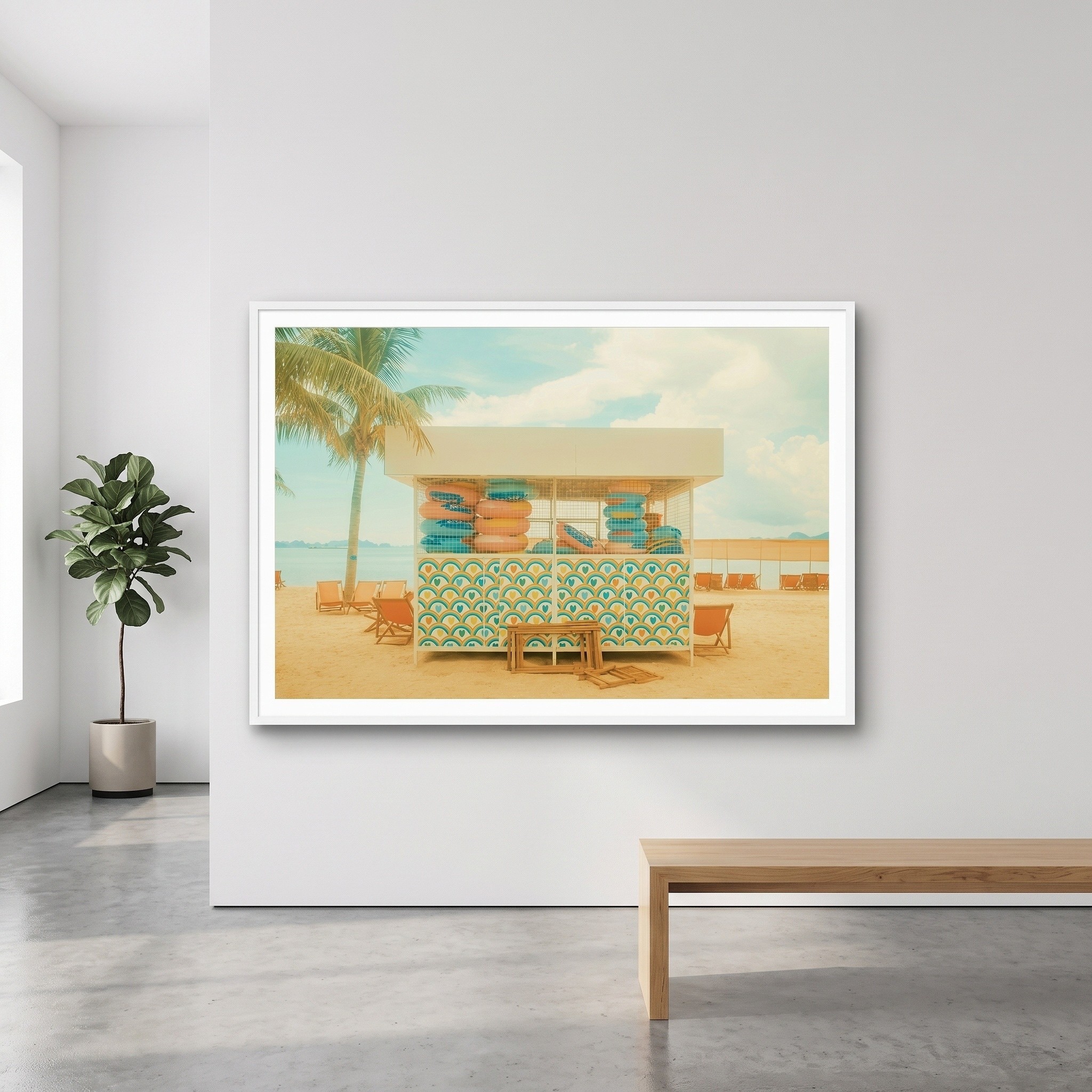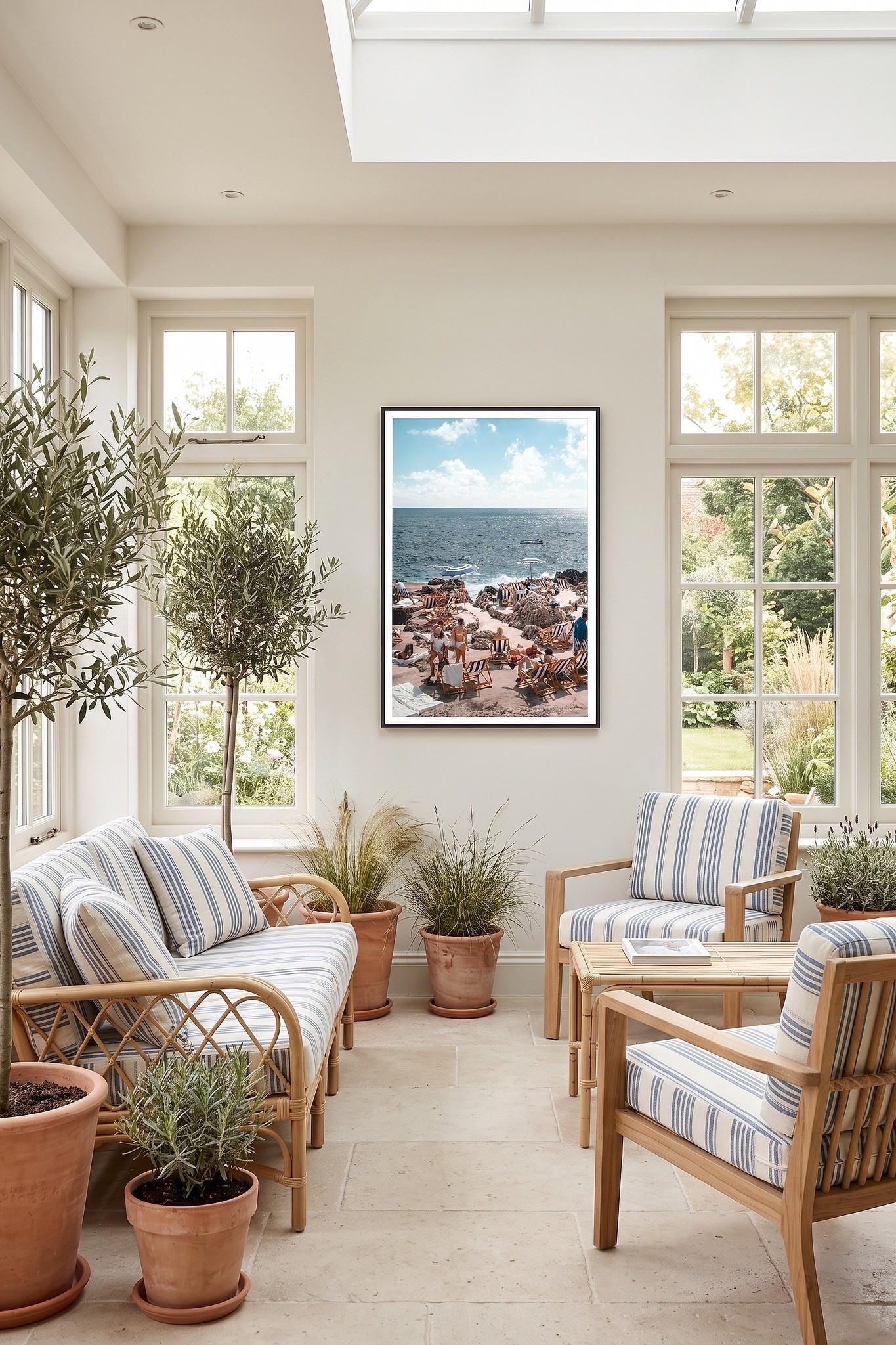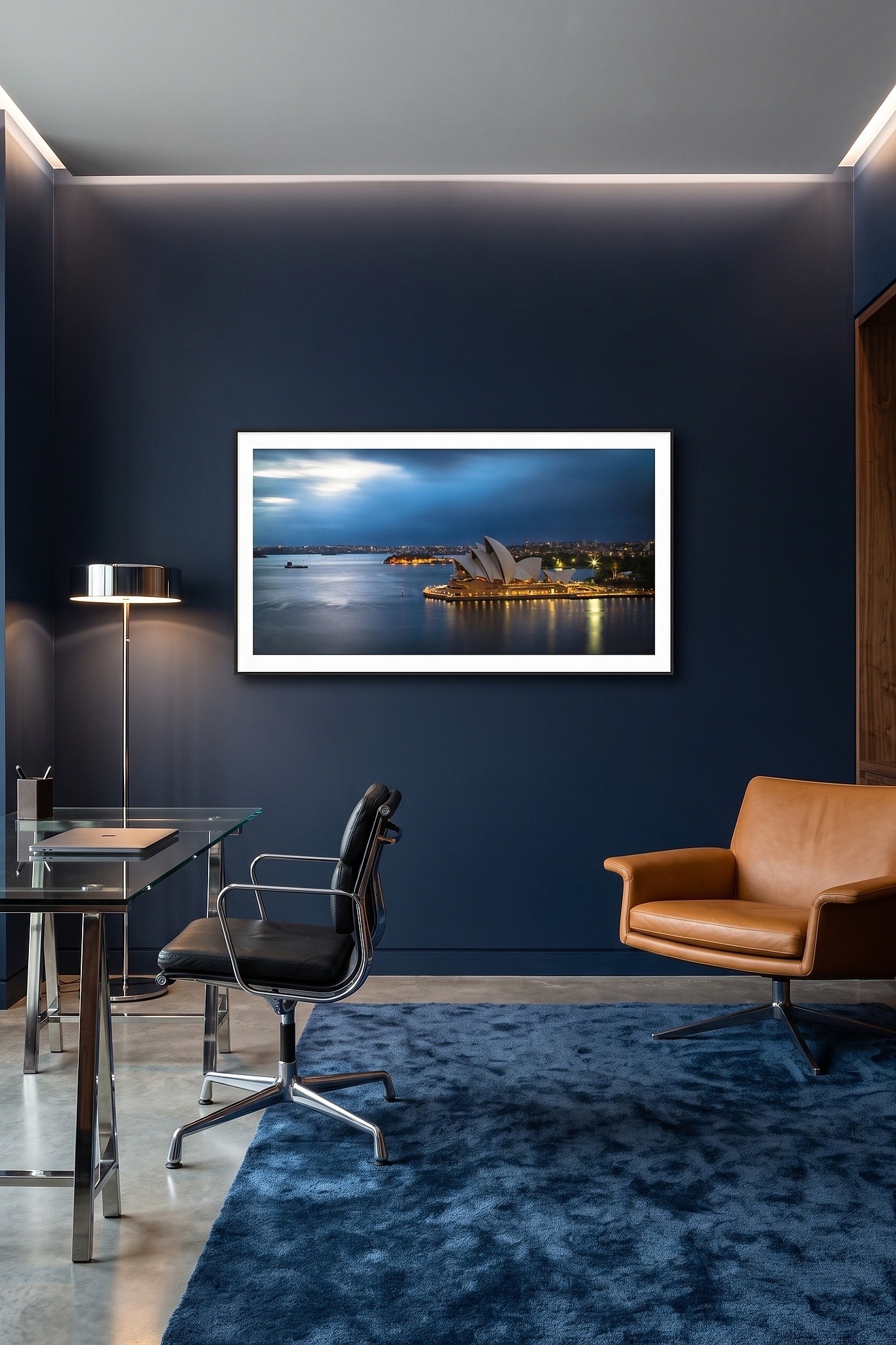

Start with the dimensions of the piece. A 60 × 90 cm print should occupy a believable amount of wall beside the furniture around it. A console, chair or doorway can provide a familiar scale reference, but it should never become the subject of the image. The buyer came to see the art.
Give the work a role in the space
A clean product visual tells a buyer what the artwork looks like. A room scene helps them consider how it might live with other materials, light and furniture. Those are different questions, and a good art listing benefits from answering both.
Consider a framed photographic print intended for a living space. One scene might show it above a timber console in directional daylight. The complete frame is visible, with enough wall around it to judge its presence. A second scene might use a different room to explore how the same work relates to a warmer wall colour. It earns its place only if it adds a new perspective for the buyer.
Choose interiors for the artwork and its likely audience. A restrained gallery wall may suit one collection; a more lived-in interior may make another easier to imagine at home. There is no need to put every piece in the same generic luxury room.
Make the physical details convincing
Room imagery is easy to admire quickly and easier to mistrust on closer inspection. Check the artwork against its source file. Its marks, colour and aspect ratio should remain intact. The entire framed piece should be visible, with no plant, person or reflection covering it.
Then check the room. Does the frame meet the wall? Do its depth and shadow make sense? Is the perspective consistent with the architecture? Would a buyer believe that a print of the stated dimensions occupies that much wall space? Credibility depends on these quiet details.
A room scene is a styled example, not a photograph of the buyer’s own home. Keep the dimensions beside the product information, and use true-to-scale AR where appropriate to help a buyer explore placement on their own wall.
Create context without repeating manual work
ArtSyncy provides curated and generated room scenes, reusable room-style presets and automated generation for selected workflows. The artwork stays connected to its resulting assets, so a seller can build a more consistent visual approach across a collection while reviewing each output for fidelity and scale.
The best test is simple: after seeing the scene, can a buyer describe the artwork’s presence in the room? If they mostly remember the furniture, the art needs more attention.