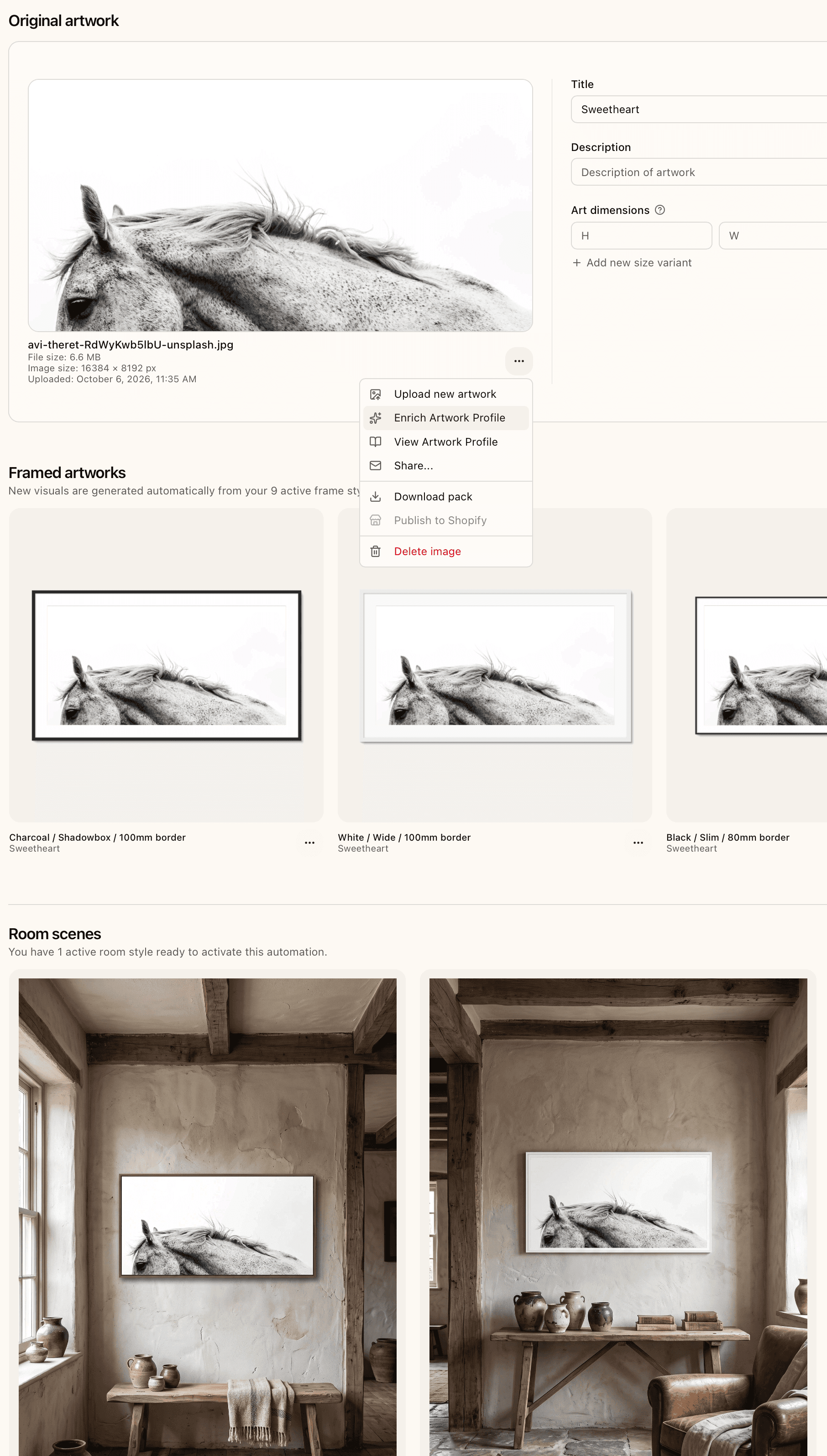

Someone encounters your artwork without knowing your studio, your website or the collection it belongs to. What can they learn from the information beside it?
A public Artwork Profile should give that person a useful introduction. It also needs enough accurate detail to connect the artwork with the product actually available.
Start with identity
Make the title and creator clear. Distinguish the artist or photographer from the gallery, publisher or merchant offering the work.
Explain what the buyer is looking at: an original, a photographic print, a reproduction or another confirmed format. Add an artist-approved story when available.
These details prevent a visually rich profile from becoming an anonymous collection of adjectives.
Separate interpretation from verified facts
Colour, composition, subject and mood can help someone describe or explore an artwork. They still involve interpretation.
Physical dimensions, edition details, materials, signatures and provenance require evidence. So do price and availability. An image analysis cannot determine them reliably on its own.
ArtSyncy's Artwork Intelligence proposes visual and contextual attributes, then brings them together with information entered or approved by the user and relevant data from supported connections. The resulting Artwork Profile needs review.
Ask two questions as you read it: “Does this describe the work fairly?” and “Where did this fact come from?”
Connect the information to the visuals
A buyer should be able to relate each visual to the available product.
If a room scene shows a framed version, identify the presentation it illustrates. If the artwork is available in several sizes, keep the dimensions clear. Include the appropriate product-page link so someone can explore the actual offer.
A scene can suggest how a work feels in an interior. True-to-scale AR helps someone assess intended size and placement on their own wall. Neither replaces verified product information.

Keep public information useful and current
ArtSyncy Artwork Profiles are public and indexable. Clear, structured information helps people and discovery systems interpret the work, but does not guarantee search rankings, indexing or AI recommendations. External discovery feeds and agentic search remain in beta.
Review information when the offer changes. A profile describing a sold-out edition as available creates a different problem from a missing adjective.
Check the public presentation as a reader would. Is the creator credited? Is the format clear? Does the product link lead to the right work? Are the available options and commercial details accurate?
Complete one profile properly
Start with one artwork rather than trying to fill every field across a whole catalogue at once. Confirm its identity, dimensions, presentation and purchase path. Then review the descriptive attributes.
That gives you a reference for what a useful profile should contain, including which details still need the creator's input.