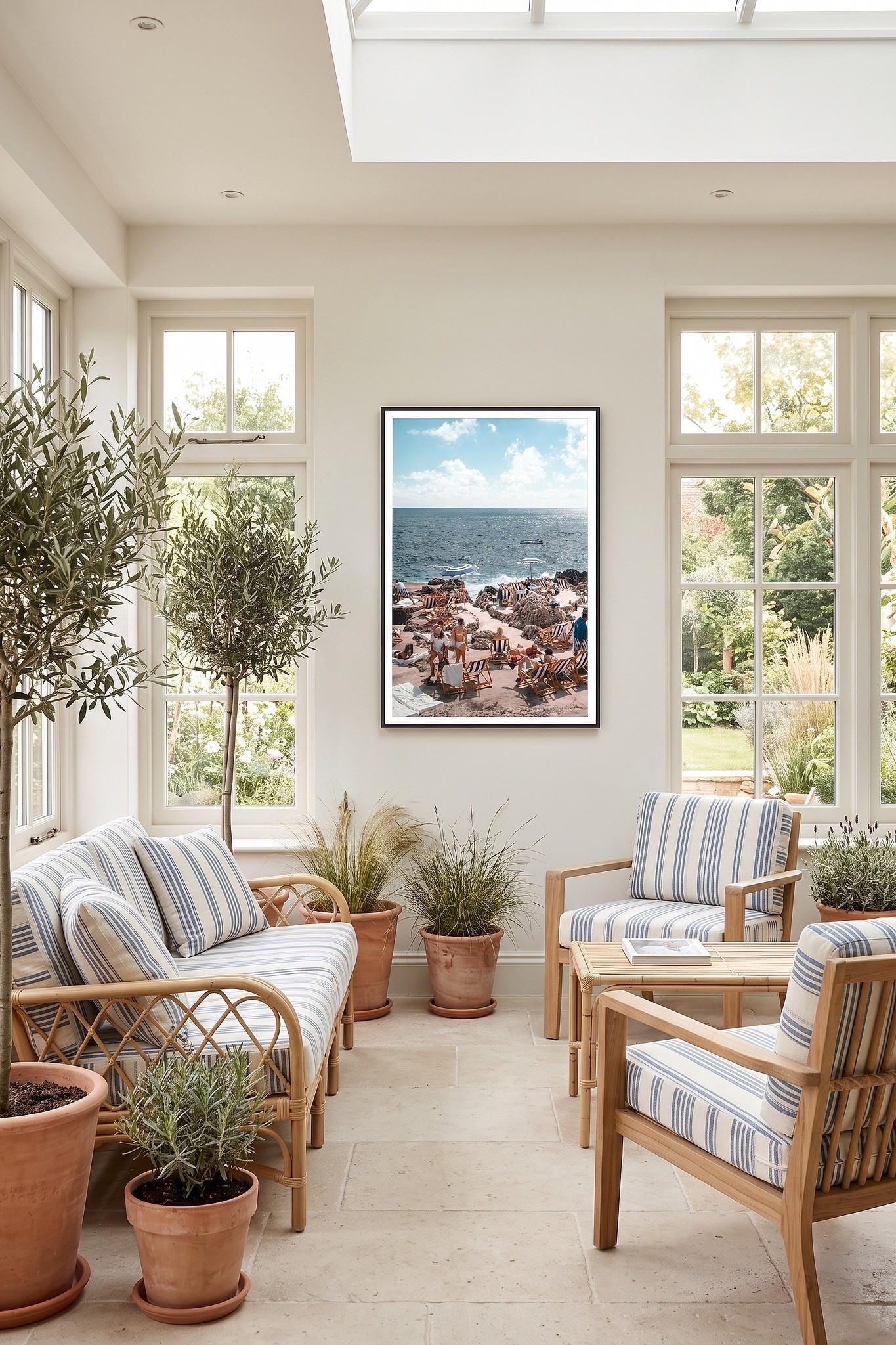
Consider someone choosing between two sizes of a photographic print. The first image lets them appreciate the photograph. Framed views show the available finishes. A room scene gives the dimensions context. Clear product details tell them what is included. Each part of the store helps them move from interest to an informed choice.
That experience takes design. It also takes care with the artwork and the information behind it.
Let the work lead
Use a clean visual hierarchy so the artwork gets attention first. On collection pages, consistent image treatment makes browsing easier without forcing every piece into the same crop. On a product page, provide a complete, faithful view before moving into framing, interiors or promotional treatment.
Make it easy to return to the artwork after exploring a variant or reading the description. Check the experience on a phone, where a buyer sees fewer images and less information at once. Good design helps them stay oriented as they move between the work and the available options.
Make choices understandable
Size and framing are part of the product, not minor settings beneath it. Show the visual difference between options you sell, label them plainly and give the finished dimensions where they differ from the artwork size. Explain material, edition, production and delivery details when relevant, using verified facts rather than assumptions inferred from an image.
A room scene can suggest how the work lives among furniture and light. True-to-scale AR can help buyers explore its size on their own wall. Those experiences work together with accurate measurements; neither should create a misleading impression of scale.
Build a standard for the next collection
An excellent page for one artwork is valuable. A repeatable standard across a catalogue is more useful to a growing art business. Decide which product views are essential, how frame variations will appear, which details need review and how each new work enters the store. That gives the team a consistent production method while allowing the art itself to vary.
ArtSyncy helps with this production layer. From an uploaded artwork, it can generate framed product visuals, variations and room scenes, and provide true-to-scale AR links. Assets remain connected to the artwork and can be reviewed and exported or downloaded for use in selling channels. The store owner remains responsible for its layout, product facts and final presentation.
A well-designed art store cannot promise a sale. It can give a buyer more of the information they need to appreciate the work and decide whether it belongs in their space. It can also give the seller a clearer method for launching the next piece.
Start with one existing listing. Ask someone unfamiliar with the artwork to identify what they would receive, which options they have and how large it would feel. Improve the page around the answers they could not find.
Explore how ArtSyncy helps prepare the visual assets behind a more complete art product page.